
What Is Invisa-RED? The Science Behind Non-Invasive Body Contouring
If you've been losing weight but still have areas that don't seem to change as quickly as you'd like, you're definitely familiar with the frustration.
That's one of the reasons we use Invisa-RED at Florida Slim & Sculpt.
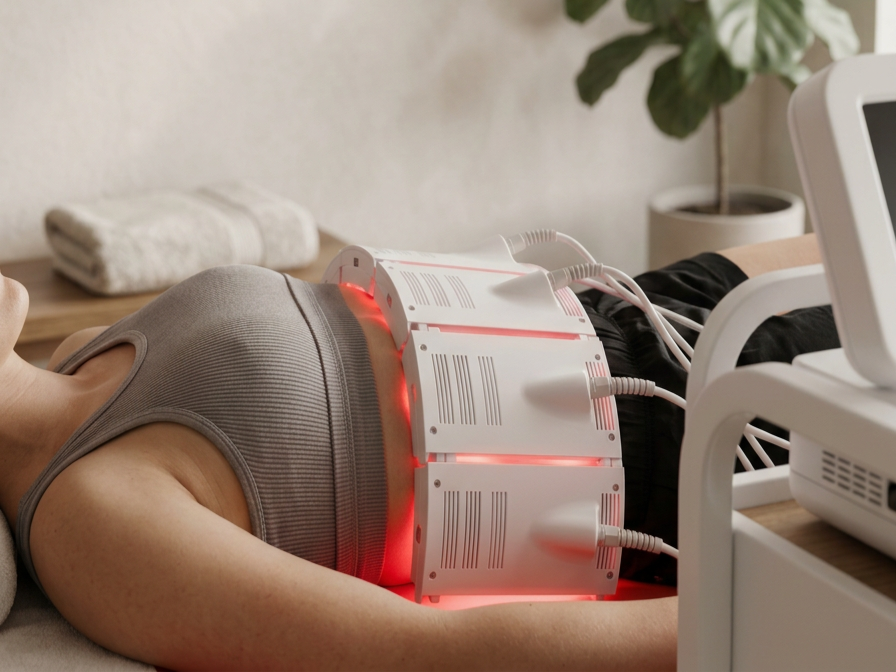
Invisa-RED is a non-invasive low-level laser system designed for body contouring. Instead of freezing fat, using needles, or requiring surgery, the device uses specific wavelengths of red and near-infrared laser light to affect fat cells beneath the skin.
But what does that actually mean — and is there real research behind it?
Let's break it down.
First: What Exactly Is Invisa-RED?
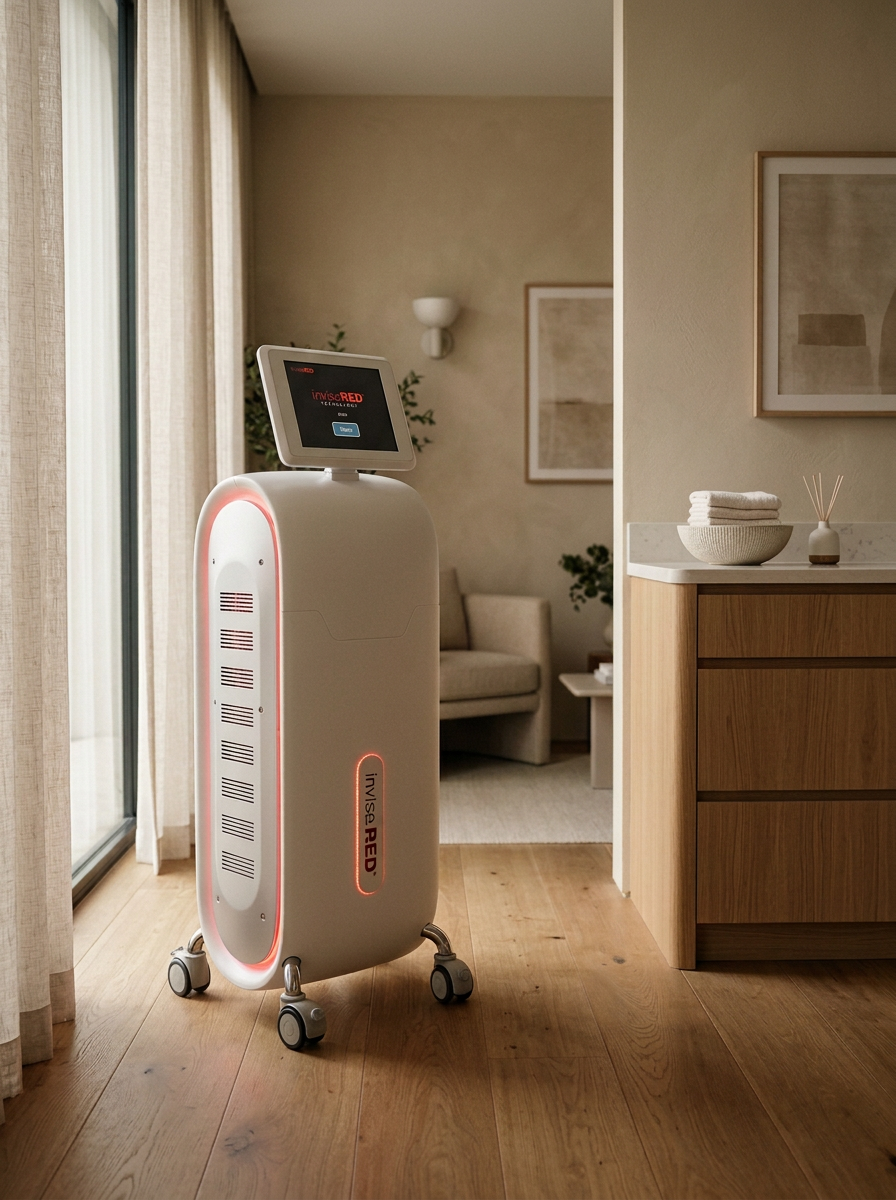
Invisa-RED ELITE is a Class II medical device cleared by the U.S. Food and Drug Administration (FDA) for the temporary reduction of circumference around the waist, hips, and thighs.
The FDA-cleared device uses two wavelengths of laser light at the same time:
680 nm red light
and
980 nm near-infrared light
Each treatment paddle contains laser diodes that deliver these wavelengths to the treatment area. According to the FDA device documentation, the system uses a process called photobiomodulation to affect adipocytes — the cells in our bodies that store fat.
And there is an important distinction here:
Invisa-RED uses lasers, not a standard red-light LED panel.
Red-light devices can use very different wavelengths, energy outputs and delivery systems. Invisa-RED was specifically evaluated as a low-level laser system for aesthetic body contouring.
How Does Invisa-RED Work?
Here's the simple version.
Fat cells, or adipocytes, store lipids. During an Invisa-RED treatment, the red and near-infrared laser energy reaches the tissue underneath the treatment paddles.
The FDA documentation describes Invisa-RED as using photobiomodulation to affect adipose cells and promote the release of lipids from those cells, which reduces the size of the treated fat cells and can result in a temporary reduction in body circumference.
Photobiomodulation itself isn't unique to Invisa-RED. It's a broader scientific term describing the way certain wavelengths of non-ionizing light can trigger biological responses in cells.
Research on low-level laser therapy has proposed several mechanisms for its effect on adipose tissue, although scientists are still studying exactly how those cellular processes work.
The important part for someone considering treatment is much simpler:
This isn't surgery, liposuction or a procedure that physically removes fat cells.
It's a non-invasive body-contouring treatment designed to reduce measurements in treated areas.
What Did the Invisa-RED Clinical Trial Find?
This is where Invisa-RED gets particularly interesting.
A randomized, double-blind clinical trial compared the functioning Invisa-RED ELITE with a sham device that looked the same but did not deliver laser energy.
ClinicalTrials.gov reports 39 enrolled participants. Participants underwent nine 20-minute treatments over three weeks.
Researchers tracked several measurements, including:
body circumference
body-fat percentage
body fat measured in pounds
The results showed a statistically significant difference between the Invisa-RED treatment group and the sham group.
The Active Group Averaged About 4.5 Pounds Less Body Fat
Among the participants included in that analysis, the active-treatment group showed an average change of approximately -4.52 pounds of body fat, while the sham group's average change was approximately -0.05 pounds.
Body fat was estimated using bioelectrical impedance analysis, or BIA.
That's worth explaining because 4.5 pounds of body fat is not the same thing as simply saying everyone lost 4.5 pounds on the scale.
The study was specifically measuring estimated fat mass.
Body-Fat Percentage Also Decreased
The active-treatment group had an average decrease of approximately 1.76 percentage points in body-fat percentage, compared with a slight average increase in the sham group.
Again, these were averages. Individual results varied.
Circumference Measurements Changed Significantly
Researchers measured multiple areas of the body and combined them to analyze overall circumference changes.
The active-treatment group had an average combined circumference change of approximately -10.16 inches, compared with approximately -3.10 inches in the sham group.
In the FDA's analysis, the estimated difference between the groups was 6.88 inches in favor of Invisa-RED, with a 95% confidence interval of approximately 3.72 to 10.05 inches. The difference was statistically significant.
One important detail: that 10.16-inch figure is not 10 inches from one body part.
It represents the change when measurements from several body sites were added together.
That's exactly the kind of context we think matters when talking about clinical results.
Is Invisa-RED FDA Approved?
You'll often hear aesthetic devices described as “FDA approved,” but FDA-cleared is the more accurate terminology for Invisa-RED.
In 2020, the FDA determined that the Invisa-RED ELITE was substantially equivalent to legally marketed predicate devices through the 510(k) clearance process.
Its official indication is for: temporary reduction of the circumference of the waist, hips and thighs, through photobiomodulation affecting fat cells within the adipose layer.
In other words, the FDA clearance supports its use as a non-invasive aesthetic body-contouring device. It should not be confused with an FDA-approved obesity medication or a substitute for medical weight-loss treatment.
Does Low-Level Laser Body Contouring Have Research Beyond Invisa-RED?
Yes — and this was important to us when looking at the technology.
Invisa-RED isn't the only low-level laser device that has been studied for body contouring.
A randomized controlled study published in Lasers in Surgery and Medicine found that participants receiving 635-nm low-level laser treatment experienced greater combined circumference reductions across the waist, hips and thighs than participants receiving sham treatment.
Another randomized study published in Obesity Surgery found statistically significant waist-girth reduction after a series of low-level laser treatments.
More recently, a 2025 systematic review examined randomized controlled trials of low-level laser therapy for reducing body circumference. The authors found reductions in measurements including the waist and hips, but they also noted that treatment protocols differed between studies and that more research is needed to determine ideal treatment parameters and long-term results.
That last part matters.
We don't believe in pretending that one machine is magic.
There is encouraging clinical evidence behind low-level laser body contouring, but results vary, research is still developing, and long-term outcomes depend on more than a treatment session alone.

Why Pair Invisa-RED With Medical Weight Loss?
This is where the Slim + Sculpt philosophy comes in.
Weight loss and body contouring are related — but they're not the same thing.
Medical weight-loss treatment focuses on helping eligible patients lose weight under the guidance of a healthcare provider. Body contouring focuses more specifically on shape and measurements.
Someone can make tremendous progress on the scale and still find that certain areas aren't changing in quite the way they expected. That's why Florida Slim & Sculpt brings the two approaches together. Rather than treating the scale as the only measure of progress, we can look at the bigger picture: weight + measurements + body composition + how you feel in your changing body.
Invisa-RED can also be booked as a standalone body-contouring treatment for clients who aren't participating in medical weight loss.
What Does an Invisa-RED Treatment Feel Like?
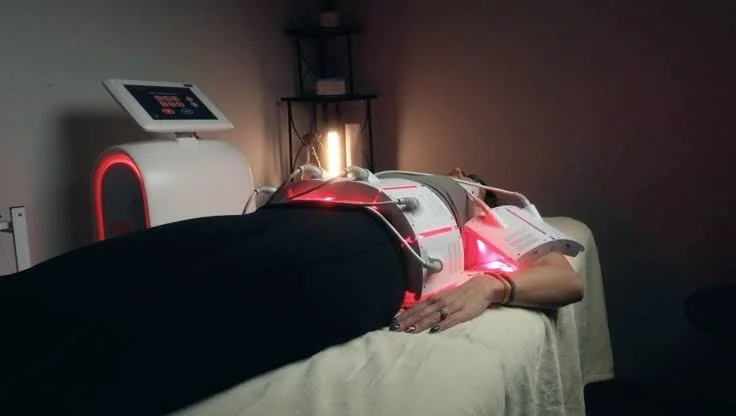
Invisa-RED is non-invasive. Treatment paddles are positioned over the selected areas of the body and deliver the prescribed laser energy.
There are:
No incisions.
No injections.
No general anesthesia.
Treatment settings and session length are selected according to the protocol being used and the individual being treated.
Because this is a medical/aesthetic device, not everyone is automatically a candidate. Your provider should review relevant health history and contraindications with you before treatment.
How Many Treatments Do You Need?
Body contouring isn't generally something we think of as a one-and-done treatment.
In the Invisa-RED clinical trial, participants received nine treatments over three weeks. At Florida Slim & Sculpt, we offer individual sessions as well as treatment packages and memberships for clients who want consistency.
The right number of treatments depends on your goals, treatment plan and provider recommendations.
And because everyone's body is different, results should never be guaranteed.
Is Invisa-RED a Weight-Loss Replacement?
No.
And we actually think that's one of the most important things to understand.
Invisa-RED is FDA-cleared for temporary circumference reduction, not as a treatment for obesity.
If your primary goal is meaningful weight loss, medical weight management, nutrition, physical activity and other appropriate health interventions play a much larger role.
We see Invisa-RED as a tool for body contouring alongside your broader goals, rather than a replacement for them.
The Bottom Line
Invisa-RED isn't simply a trendy red-light machine.
It is an FDA-cleared, dual-wavelength low-level laser system with a randomized, sham-controlled clinical trial behind it.
The research found measurable differences in body circumference, estimated body-fat mass and body-fat percentage between participants who received active Invisa-RED treatments and those who received sham treatments.
At the same time, responsible body contouring means keeping expectations realistic.
Results vary. Circumference reduction is temporary. The technology doesn't replace healthy habits or appropriate medical treatment.
For us, that's exactly why Invisa-RED makes the most sense as part of a bigger picture.
Lose the weight. Sculpt your progress. Feel good about the results you're working for.
Ready to Learn What Could Work for You?
Whether you're interested in Invisa-RED on its own or want to combine body contouring with medical weight loss through our Slim + Sculpt Signature program, we're happy to help you decide which option best fits your goals.
References
U.S. Food and Drug Administration.510(k) Premarket Notification K192275: Invisa-RED ELITE. FDA Center for Devices and Radiological Health, 2020. The clearance identifies the device as a Class II low-level laser system for aesthetic use and describes its indication for temporary circumference reduction of the waist, hips and thighs.
ClinicalTrials.gov.NCT03811093: Comparing the Efficacy of a Dual-Frequency LLLT Device With a Sham Device as a Therapy for Adipose Tissue Loss. Sponsored by IR Technology, LLC. The registered study reports enrollment, study design, treatment protocol and outcome data for circumference, estimated body-fat percentage and estimated fat mass.
Jackson RF, Dedo DD, Roche GC, Turok DI, Maloney RJ. Low-level laser therapy as a non-invasive approach for body contouring: a randomized, controlled study. Lasers in Surgery and Medicine. 2009;41(10):799–809. doi:10.1002/lsm.20855.
Caruso-Davis MK, Guillot TS, Podichetty VK, et al. Efficacy of low-level laser therapy for body contouring and spot fat reduction. Obesity Surgery. 2011;21(6):722–729. doi:10.1007/s11695-010-0126-y.
Mustafa GA, et al. Low-level laser therapy for reducing body circumferences: a systematic review. Lasers in Medical Science. 2025;40(1):534. doi:10.1007/s10103-025-04755-7.
Avci P, et al. Low-level laser therapy for fat layer reduction: a comprehensive review. Lasers in Surgery and Medicine. 2013. The review discusses proposed mechanisms, available clinical evidence and remaining limitations in the evidence base.